
Purchase and Rehab Loan Draw Process in Massachusetts
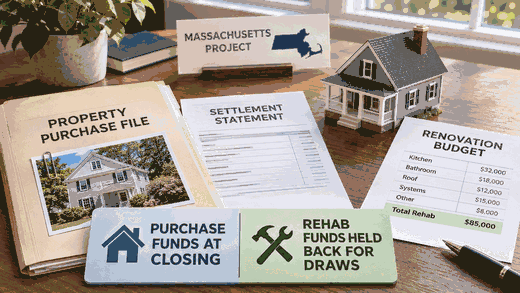
We provide purchase and rehab loan financing for real estate projects in Massachusetts. The purchase and rehab loan draw process typically funds the acquisition at closing and releases the approved renovation budget in stages as work is completed and verified. Our team is most experienced in this field when coordinating purchase financing, renovation budgets, and staged draws for Massachusetts projects.
What is a purchase and rehab loan draw?
A purchase and rehab loan combines financing for acquiring a property with an approved budget for renovations. The purchase funds are generally handled at closing. The renovation funds are commonly held back and released through draws as the borrower completes approved work.
Massachusetts renovation lending guidance describes a single closing with funds disbursed on a draw basis after closing. The details vary by loan program, property, and lender, so the loan agreement and draw instructions determine the process for each project.
How the draw process works
1. The lender approves the project budget
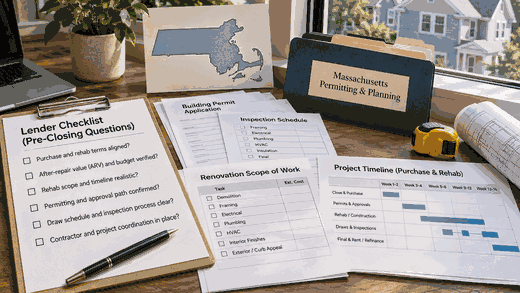
Before closing, the lender reviews the property, renovation plan, line item budget, and expected project outcome. The approved budget usually connects each cost to a defined part of the scope of work, such as roofing, electrical, plumbing, flooring, or kitchen improvements.
The budget and scope may also support the lender’s review of the property’s after repair value, often shortened to ARV. Keep the budget, contractor proposals, and scope aligned so the draw schedule reflects the work the lender approved.
2. The purchase closes and the rehab funds are reserved
At closing, the purchase portion of the loan is applied to the acquisition according to the settlement statement. The approved rehab allocation is usually reserved for later draws instead of being released as unrestricted cash at closing.
The specific arrangement can differ. Funds may be controlled by the lender or another party named in the loan documents. Ask where the rehab allocation is held, how it is tracked, and what conditions apply to accessing it.
3. Work is completed according to the approved scope
After closing, the borrower and contractor complete a phase of the renovation. The work should match the approved scope and budget line items. Keep dated photos, contractor invoices, receipts, and records of any approved change orders as the project moves forward.
A draw request is generally tied to completed work. Some lenders may have specific procedures for materials or other costs, so confirm how those items are treated before placing orders or scheduling contractor payments.
4. The borrower submits a draw request
When a milestone is ready for review, the borrower submits a draw request using the lender’s form or portal. Requirements vary, but a draw package may ask for:
• Property address and loan number.
• Draw number and amount requested.
• Completed budget line items and percentage of completion.
• Contractor invoices or receipts.
• Dated photos of the completed work.
• Proof of payment or lien waivers, when required.
• Permits or inspection records, when relevant.
• Details of approved changes to the scope.
Match the line item descriptions in the draw request to the approved budget. Some lenders also ask for an updated schedule showing amounts previously drawn and remaining funds.
5. The work is inspected or otherwise verified
The lender or its inspection provider checks whether the work claimed in the draw request has been completed. The review may involve an onsite visit, submitted photographs, or another lender-approved method.
The amount released may reflect the verified percentage of completion rather than the full amount requested. A clear scope, accessible work areas, organized records, and accurate photos can help the reviewer assess progress against the project plan.
6. The lender reviews the request and releases funds
After verification and document review, the lender calculates the amount eligible for release under the loan terms. The amount may account for inspection fees, required reserves, or other provisions in the agreement. Funds may go to the borrower or directly to a contractor, depending on the lender’s process.
Draw timing also varies by provider and by the completeness of the request. Some public guides describe inspection and funding windows, but they are examples rather than a universal standard. Ask when the timing clock starts and how the lender communicates approval and payment status.
7. The borrower tracks the remaining budget
After each draw, update the project budget with the amount requested, amount approved, funds released, and balance remaining in each category. This helps the borrower and contractor plan the next phase against the available rehab funds.
If the project scope or cost changes, ask the lender how to submit a review change. Getting direction before proceeding can help keep the revised work and the draw records consistent.
Example of a purchase and rehab draw
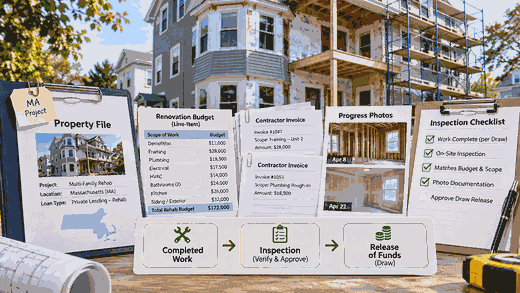
Suppose a project has a purchase price of $250,000 and an approved renovation budget of $60,000. The purchase funds are handled at closing under the loan terms. The renovation amount is reserved for eligible project work and released through approved draws.
For example, the first draw might relate to completed demolition and framing, while a later draw might cover verified electrical, plumbing, or finish work. This is an illustration only. The actual amounts, milestones, inspection requirements, and payment timing are set by the loan documents and lender procedures.
Massachusetts planning considerations
Each Massachusetts city or town may have its own permitting and inspection process. Build the relevant local steps into the project timeline, particularly when work requires permits or inspections before the next phase can begin.
Property condition and contractor scheduling also affect the sequence of work. A realistic draw schedule accounts for the time required to complete each phase, prepare documentation, arrange verification, and receive funds. Coordinate contractor payment dates with the lender’s process so the project has an appropriate plan for cash flow.
Questions to ask before closing
Before relying on a purchase and rehab loan draw schedule, ask the lender:
• Which documents are required for each draw?
• Does the lender require an onsite inspection, photos, or both?
• How are partially completed line items handled?
• Is there a minimum draw amount or a fee per inspection?
• What is the expected review and release process?
• Are funds sent to the borrower or directly to contractors?
• How are materials, deposits, and contractor invoices treated?
• How is interest calculated on the rehab allocation?
• How are change orders and budget transfers approved?
• What requirements apply to the final draw?
These details help the borrower build a project calendar and understand what the financing will require after closing.
Related: What Private Lenders Look for in Real Estate Loan Applications
Frequently asked questions
Usually, the purchase funds are handled at closing while the approved renovation budget is reserved for later draws. Confirm the exact structure in the lender’s written terms.
A rehab holdback is the portion of an approved loan allocated to renovation work and released as eligible work is completed. Its location, documentation requirements, and release conditions depend on the loan agreement.
A lender may request a draw form, completed budget line items, invoices or receipts, dated photos, inspection access, and lien documents where required. Follow the lender’s current instructions for the specific loan.
Many lenders verify progress before releasing renovation funds. Verification may involve an onsite inspection, photos, or another method specified by the lender.
The timeframe depends on the lender, inspection method, document review, and whether the request is complete. Ask the lender for its expected timing and when that timing begins.
A borrower may be able to request a scope or budget change, subject to lender review. Ask how to submit the change and wait for the required direction before treating the revised work as part of the approved draw plan.
Planning the project from closing through the final draw
The purchase and rehab loan draw process links the acquisition, approved scope, contractor schedule, inspections, and renovation funds. Before closing, understand how funds are reserved, what documentation each draw requires, and how payment timing fits the project calendar. In Massachusetts, also account for the applicable local permitting and inspection steps when building the renovation timeline.
For related information, link Massachusetts purchase and rehab loans to the relevant financing page and rehab loan budget checklist to the budget article.