
How to Calculate After-Repair Value Using Comparable Sales
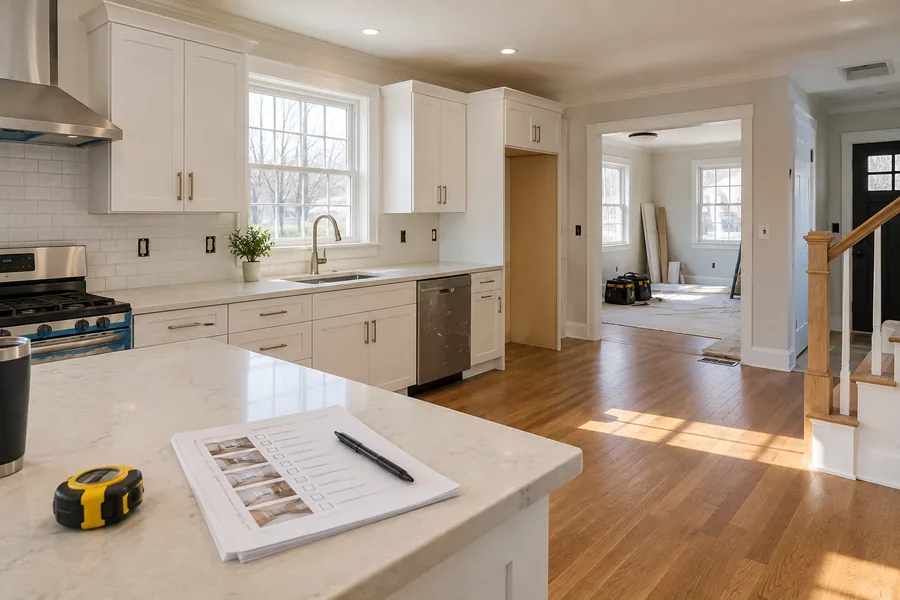
To calculate after-repair value using comparable sales, estimate what the property could be worth after the planned renovation, then compare it with recently sold properties that match its location, size, type, and finished condition.
We offer real estate investment financing in Massachusetts, and we are most experienced in this field. A careful ARV estimate helps investors evaluate a fix-and-flip before committing to a purchase or renovation plan.
What is the after repair value?
After repair value, often called ARV, is the estimated market value of a property after specified repairs and renovations are complete. It is based on the property’s expected finished condition and sales of similar properties.
ARV is an estimate for project analysis. It is not the same as the property’s current value, a listing price, or a guaranteed sale price. A lender may conduct its own valuation as part of underwriting.
How comparable sales help estimate ARV
Comparable sales, or comps, are properties that have sold and share relevant features with the property you plan to renovate. For an ARV estimate, look for sales that resemble the property after the work, rather than sales of homes in their current condition.
A useful comp set generally prioritizes:
| Comparison factor | What to look for |
| Location | The same neighborhood or a similar local market |
| Property type | A similar single-family home, condominium, or multifamily property |
| Size and layout | Similar finished square footage, bedroom and bathroom count, and floor plan |
| Condition | A renovation level close to the project’s planned finish |
| Sale details | A completed sale with a verifiable sale price |
| Timing | Recent sales that reflect current market conditions |
There is no universal distance or age limit that makes a sale a good comp. Use the closest relevant sales available, and widen the search only when the immediate area lacks comparable properties. Massachusetts valuation guidance similarly emphasizes property similarity, sale recency, and adjustments for significant differences.
Step-by-step method to calculate ARV
1. Define the finished renovation
Write down the work the project will deliver. Include features that could affect buyer interest and value, such as kitchen and bathroom updates, flooring, layout changes, heating systems, and exterior improvements.
The renovation plan sets the standard for choosing comps. A home receiving cosmetic updates should be compared with similarly updated properties. A property receiving a more extensive renovation should be compared with homes finished to a similar level.
2. Find relevant sold properties

Search for completed sales with similar property features and finished condition. Public property records, local listing data, and a real estate professional familiar with the area can help verify sale prices and property details.
Use active listings as context for current competition, but distinguish asking prices from completed sale prices. A listing shows what a seller is seeking; a closed sale shows what a buyer paid.
3. Review each comp against the subject property
Compare each sale with the renovated version of your property. Consider differences such as:
- Finished square footage.
- Bedroom and bathroom count.
- Property type and layout.
- Lot size and parking.
- Age and overall condition.
- Renovation quality.
- Location within the local market.
A nearby sale may still be a weak comp if it has a different property type or substantially different features. A slightly farther sale may be more useful if it better matches the finished property.
4. Adjust for meaningful differences

If a comp has a feature that makes it more valuable than the subject property, account for that difference in your analysis.
If the subject is expected to have a feature the comp lacks, consider how local buyers value that difference.
Use supportable adjustments based on local sales evidence. Avoid adding value based only on the renovation’s cost.
A project may cost a certain amount to complete, while the market may recognize a different amount of value for that work.
Massachusetts valuation guidance describes adjustments for relevant differences between a comparable property and the property being valued.
5. Reconcile the adjusted sale prices
After reviewing the comps and making reasoned adjustments, compare their adjusted sale prices.
Give the most weight to the sales that closely match the property’s location, size, layout, and planned finish.
A median or weighted estimate can help summarize the comp set, but the calculation should still reflect the quality of the evidence.
Review any unusually high or low sale to understand whether it represents the local market or a property difference.
Worked ARV example

Suppose a Massachusetts investor plans to renovate a property into a finished 1,600 square foot home. After selecting relevant renovated sales and adjusting for differences, the investor arrives at these illustrative comp values:
| Comparable sale | Adjusted value |
| Comp 1 | $490,000 |
| Comp 2 | $505,000 |
| Comp 3 | $495,000 |
The median adjusted value is $495,000, which can serve as a starting ARV estimate. The investor should then review whether the comps truly reflect the planned finish, whether their locations are relevant, and whether any sale deserves more or less weight.
These sample values illustrate the method. They are not actual Massachusetts sales or a property valuation.
How price per square foot can help
Price per square foot can be a useful cross-check when comparing properties with similar layouts and features:
Sale price ÷ finished square footage = sale price per square foot
For example, a renovated 1,600-square-foot comp that sold for $496,000 has a sale price of $310 per square foot. That figure can help compare it with other similar properties.
Price per square foot is a screening tool, not a complete ARV method. It may be less useful when properties differ in layout, condition, lot, property type, or location. Compare the full property details before relying on a single average.
Common ARV calculation mistakes
Investors can improve their estimate by watching for these issues:
- Using asking prices instead of completed sale prices
- Comparing a renovated property with distressed or unrenovated sales
- Choosing the highest sale without checking its features
- Mixing different property types or neighborhoods
- Assuming renovation cost equals added market value
- Using a renovation scope that does not match the comps
- Treating a simple price per square foot average as a complete valuation
A strong estimate comes from the most relevant evidence, not simply the largest possible set of sales. Current investor and lender guides also emphasize selecting similar renovated sales and adjusting for important property differences.
How ARV fits into a fix and flip plan
Once you estimate ARV, use it alongside the purchase price, renovation budget, financing costs, holding costs, and selling expenses. ARV helps frame the potential finished value, while the rest of the project analysis shows how the costs and financing fit together.
A lender may use its own comparable sales and valuation process when reviewing a fix and flip loan. The lender’s ARV may differ from an investor’s estimate, so ask how the valuation is developed and how it affects loan sizing.
Frequently asked questions
Use enough relevant sales to understand the local range, while prioritizing similarity over quantity. A small group of strong comps can be more informative than a long list of properties with different features.
For ARV, focus on properties sold in a condition similar to the renovation you plan to complete. Unrenovated sales can help analyze the current property, but they do not directly show the value of the finished project.
Price per square foot can serve as a cross-check. It works best when the properties have similar size, layout, condition, and location. Review comparable features and adjusted sale prices before settling on an estimate.
ARV is an investor’s estimate of value after renovation. An appraisal is a professional valuation based on the assignment, available market data, and applicable standards. A lender may request its own appraisal or other valuation.
No. ARV estimates the potential finished property value. To estimate project profit, also account for purchase and renovation costs, financing, holding expenses, closing costs, and selling expenses.